Clearview inpatient facility
The HousemaidClearview inpatient facility is the institution where Nina Winchester is treated after the sedative-and-bathtub incident involving herself and her daughter, Cecelia Winchester. Across two stays, it gives Nina medication, therapy, and a path toward discharge, but it also becomes the setting in which her memories of captivity are repeatedly explained as symptoms. The hospital’s role is therefore double: it offers care for a genuine crisis while lending institutional weight to a story about Nina that Andrew Winchester controls.
Setting and Admission
Nina spends the next eight months of her life at Clearview inpatient facility after the account of the incident is established around her. She is told that she took sedatives prescribed by her physician, put some in Cecelia’s bottle, and placed her daughter in a bathtub with the water running. The explanation presents the episode as an attempted murder-suicide interrupted because Andrew suspected something was wrong and the police arrived in time. Nina remembers none of the actions that make up this account; she remembers only waking and finding Cecelia in the bathtub.
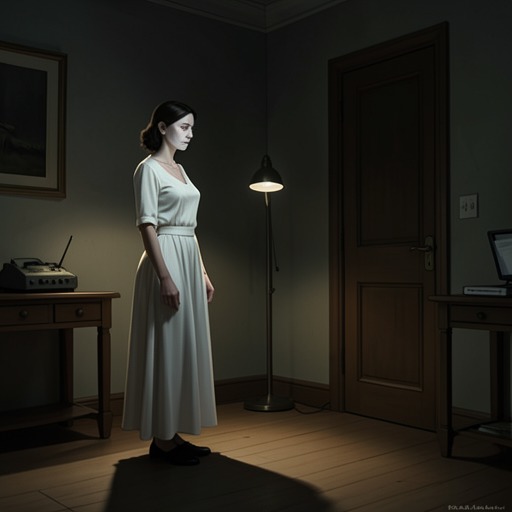
The facility is described as an expensive institution for people with psychiatric issues who have money. Nina stays in a private room, and her admission initially includes being locked inside it. Later, after she has done better with medication, the room is left unlocked, a change presented to her as a privilege. That distinction gives the physical arrangements a particular significance: freedom of movement is not simply restored as an ordinary right but granted as evidence of progress within treatment.
Diagnosis and Treatment
At Clearview, Nina’s therapist, Dr. Barringer, tells her she has major depression and delusions. The delusions are said to explain her belief that Andrew kept her captive in a room for two days; the depression is said to have caused the bathtub incident. Nina initially resists this account because her memories of being in the attic feel vivid, down to the sting on her scalp from pulling out her hair. Dr. Barringer explains that delusions can feel real even when they are not, directly challenging the authority Nina gives to her own recollection.
Nina takes an antipsychotic and an antidepressant to prevent another episode. In therapy, she acknowledges her part in what she has been told happened, despite having no memory of taking the pills or placing Cecelia in the bathtub. Her acceptance does not arise from recovered memory; instead, it develops through repeated explanations and her confidence that Andrew could never have harmed her. The gap between what Nina remembers and what she is taught to believe remains central to the hospital episodes.
Medication also shapes the everyday experience of the stay. Nina’s appetite increases on the antipsychotic, and she gains twenty pounds. Andrew visits after work in a suit and tie, bringing muffins and cookies for the nurses and saving a blueberry muffin for her. Nina interprets his visits and kindness toward the staff as evidence that he is a wonderful husband, and that interpretation helps persuade her that her memories of the attic must be delusions. The hospital is not shown as simply endorsing Andrew’s account, but its treatment framework becomes inseparable from Nina’s growing reliance on it.
Family Visits and Discharge
Nina is not allowed to see Cecelia for the first several months of her stay. When Andrew eventually brings the child to visit, mother and daughter cling to one another; when visiting hours end, Cecelia cries inconsolably. The reunion makes the separation concrete, while also giving Nina a reason to anticipate leaving and returning to family life.
Andrew tells Nina he will collect her at noon on Sunday and drive her home, with his mother staying with Cecelia. Nina welcomes the prospect of seeing her daughter, yet dreads returning to the house, especially the attic. That fear persists alongside her stated wish to resume her former life. Discharge therefore does not resolve the conflict between the hospital’s explanation of her memories and the unease attached to the place where those memories began.
Second Admission and Narrative Significance
Nina later returns to Clearview inpatient facility for another two-month stay. Before this admission, Andrew has approached each new friend she makes, told them about her mental-health history and the earlier incident, and asked them to contact him if they become concerned that she is having another episode. Suzanne briefly leaves a conversation under the pretext of going to the bathroom and calls Andrew to warn him that Nina is having delusions again. He is waiting when Nina gets home, and the result is a further hospitalization.
During this second stay, Nina discovers that at least one of the facility’s directors is a golfing buddy of Andrew’s father. The detail raises a question about the independence of the institution’s authority, but does not establish that the director arranged or influenced Nina’s treatment. After discharge, Suzanne apologizes, explaining that she was worried Nina needed help. Nina forgives her because she believes Suzanne, like herself, was tricked; nevertheless, their friendship is never the same, and Nina says she can no longer trust anyone.
Across both admissions, Clearview inpatient facility is more than a backdrop for diagnosis. The first stay helps establish the explanation Nina adopts for the bathtub incident and her attic memories; the second follows Andrew’s intervention through a friend and deepens Nina’s isolation. The contrast between a locked room and an unlocked one, and between promised recovery and renewed admission, makes the institution’s care inseparable from the uncertainty over whose account of Nina’s life will be believed.